Moneymaker/Getty Images
CNN —
President Donald Trump is happy to talk about the financial markets when they’re rising, as they were on Wednesday, but when markets were falling Thursday in the aftermath of his remarkable turnabout on tariffs, he punted to the closest adviser around.
This time, Treasury Secretary Scott Bessent was in the hot seat.
When a reporter in the Cabinet Room asked Trump to weigh in on yet another day of tumbling stocks, the president said: “Scott, do you want to have a statement on that?”
Ad Feedback
“Sure,” Bessent said, pausing for a moment. “The up 2, down 1, is not a bad ratio – or up 10, down 5.”
As his fellow Cabinet members and the president watched, Bessent filled the air with words. Finally, he arrived at this definitive message: “We will end up in a place of great certainty over the next 90 days on tariffs.”
The next three months at the White House, until the deadline of the tariff pause approaches on July 8, will offer a telling window into just who has Trump’s ear on trade policy.
For now, that clearly includes Bessent, who is credited with persuading the president to pull back – at least temporarily – from the brink of economic calamity, emerging as one of the leading voices in the latest round of global economic upheaval.
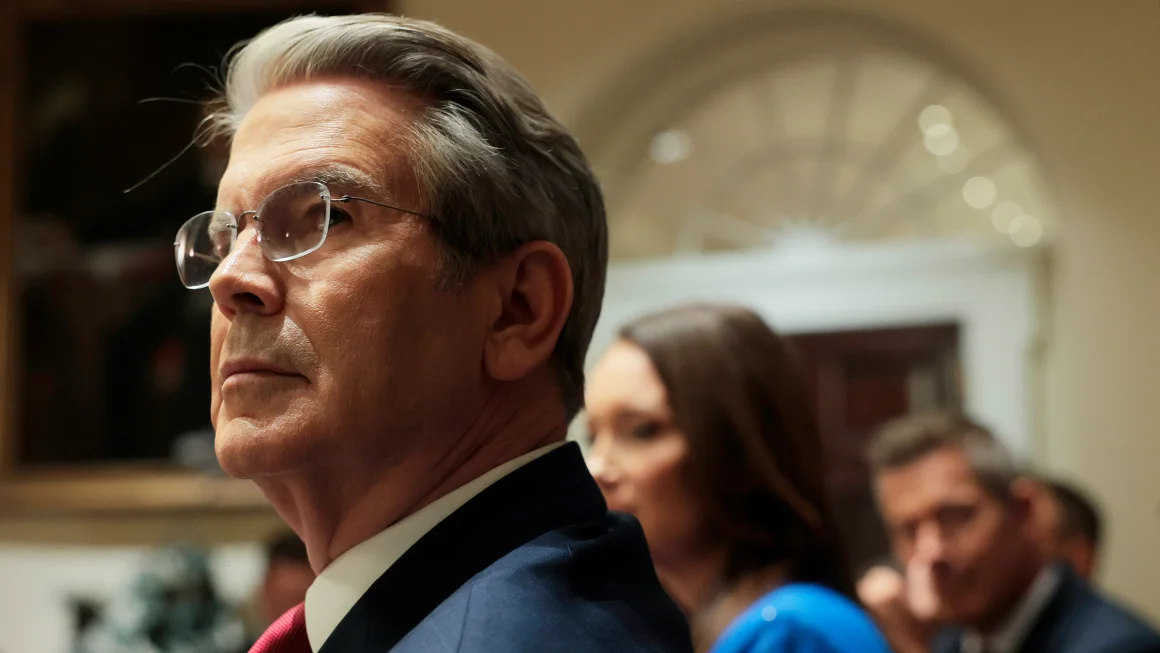
But others, including trade hawk Peter Navarro, continue to wield influence with Trump, even if to some it appeared his hardline position fell out of favor with Trump in his decision to retreat.
Navarro acknowledged Thursday he wasn’t in the room as the president reached his final decision; that duty fell on Bessent and Commerce Secretary Howard Lutnick, who has rarely missed an opportunity to visit the West Wing, sometimes to the confusion of the people who work there.
But Navarro — a longtime Trump ally who served prison time last year for refusing to comply with a subpoena from the House Select Committee that investigated January 6, 2021 — said it hardly mattered.
“It doesn’t matter who was in the room. The boss calls and whatever. That’s not the point,” Navarro told CNN. “The point is that this team is the best team in history, we provide him the appropriate set of advice, every one of us on the team has a different skill set that combines to the collective wisdom of the group and the boss makes the decision.”
To some, Trump’s economic team amounts to “angels and demons,” whispering their divergent advice on tariffs and trade from opposite shoulders. To others, the disparate band of aides that have spent the past week forming, then reversing, new worldwide tariffs are all birds of a feather, willing to indulge the president’s impulses no matter the economic cost.
Whichever the interpretation, one truth abides in the second iteration of the Trump presidency: no one is voicing much dissent to the president himself, who continues to wage a global trade war that has spooked markets, foreign leaders and many of his own allies.
That, officials say, is key to understanding the dynamics of the president’s economic agenda amid an ever-more-volatile global economic standoff: Trump’s objectives rest on the unapologetic view that the experts are wrong, and his gut is right.
While Trump advisers this week quietly acknowledge the obvious — that the messaging, preparation and execution each fell far short of what was necessary on the reciprocal tariff plan — the decision to green light the action wasn’t based on a whim.
“Somebody had to pull the trigger,” Trump told reporters. “I was willing to pull the trigger.”
Still, a week on the brink and the fallout in the day after Trump’s three-month pause on some tariffs has laid bare the challenge ahead, and the people who will manage it.
The Wall Street vs. Trade Warrior construct that defined Trump’s first economic team was rife with bureaucratic knife fights, profanity-laced shouting matches and, on more than one occasion, aides on the verge of physical altercation.
From the outside, the 2.0 version of Trump’s team has been viewed in a similar manner, with former hedge fund manager Bessent and National Economic Council Director Kevin Hassett in the “Wall Street” camp and Navarro, Lutnick and Stephen Miller, the deputy chief of staff for policy, filling the “trade warrior” roster.
That dynamic does exist, but by degrees of difference, not chasms. And unlike in Trump’s first term, when advisers like Gary Cohn and Steve Mnuchin made overt efforts to limit the president’s tariff impulses, the president’s advisers this time have all been explicit that they aren’t there to chart their own path. Trump decides, and they execute, whether it was their preferred option or not, White House officials say.
That dynamic was on display this week, as Trump’s tariffs rocked the global economy. Trump’s team regularly updated him on market conditions and had asked for his team to prepare a number of options for ways to pump the brakes as market conditions worsened. He kept a close eye on the business news networks and the perspectives shared on television by CEOs.
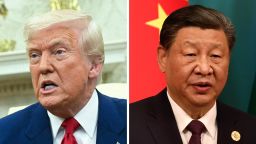
Related articleTrump is waiting for Xi to call. The Chinese see it differently
Trump and some of his senior aides took notice when it appeared some members of his team seemed out of step in interviews, including on whether the tariffs amounted to a negotiation or whether they were meant to be permanent. Lutnick’s appearances in particular frustrated many officials, and his television bookings waned in the days before Wednesday’s pause.
Mostly, however, Trump was on the phone with foreign counterparts and powerful executives desperate for some kind of exit ramp.
“He just loves this shit,” a senior White House adviser said. “Talking deals with the most powerful people in the world when he’s got all the cards and leverage is like air for him.”
Trump has made clear to his economic team that he wants to be personally involved in each negotiation – and that he plans to drive a hard bargain and secure tangible wins, even if his threshold or even parameters for that metric are a mystery to his top aides.
“My opinion is that there’s a variety of improvements that could take place,” Council of Economic Advisers Chair Stephen Miran said when asked for clarity earlier this week. “But at the end of the day the president is the decider and he’s gonna decide.”
Miran’s answer, while obvious on some level, also reflects a reality about Trump’s economic team that is dramatically different from his first. There are disagreements and varying degree of enthusiasm about the president’s final decision to impose sweeping new tariffs from the Rose Garden on April 2. But there has been no real attempt at changing his mind.
The White House has, at times, tried papering over the differences between Trump’s aides. But for the most part, they have allowed the dissension to spill into public view, suggesting it actually reflects a robust decision-making process and not the chaotic viper pit it can appear from the outside.
“(Trump) has people at the highest levels of this government in this White House who have very diverse opinions on very diverse issues. But the president takes all opinions in mind, and then he makes the best decision based on the best interests of the American public,” press secretary Karoline Leavitt said this week while explaining why Elon Musk, the billionaire adviser who has little role in trade talks, called Navarro a “moron” and “dumber than a sack of bricks” online.
“Elon and I are fine,” Navarro told CNN on Thursday. “It’s no problem. It’s no problem.”
Төрөл: Мэдээ мэдээлэл | Таг: бразил
Харагдсан: 920 удаа